
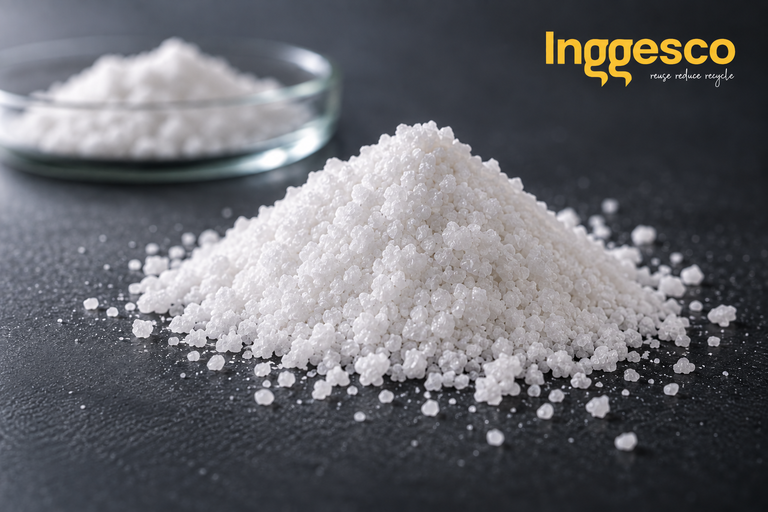
Potassium antimony tartrate is a chemical compound containing antimony and potassium associated with tartrate, which is derived from tartaric acid. It is also traditionally known as tartar emetic and may be found under other names, such as antimony potassium tartrate or, in international documentation, potassium antimony tartrate.
However, when a company needs to purchase this product, knowing its name alone is not enough Purity, pH, loss on drying, specific impurities, supply format and technical documentation should all be checked to determine whether the product is suitable for a particular application.
At INGGESCO, we know that this is particularly important when several departments are involved in the purchasing process. We therefore always recommend checking the product’s technical documentation to determine exactly which substance and specification is being purchased.
Why Is It Also Known as Tartar Emetic?
The name is related to its historical applications as it was formerly used in medicine as a powerful agent to induce vomiting (an emetic). The term can still be found in technical documentation, catalogues and specialist searches.
In English, common names include tartar emetic, potassium antimony tartrate and antimony potassium tartrate.
For current commercial transactions, it is preferable to use the chemical name stated in the product documentation and check its identifiers before placing an order. This helps prevent two materials with similar names from being automatically considered equivalent.
What Does It Look Like?
Potassium antimony tartrate may be supplied as a colourless crystalline solid or white powder and is soluble in water.
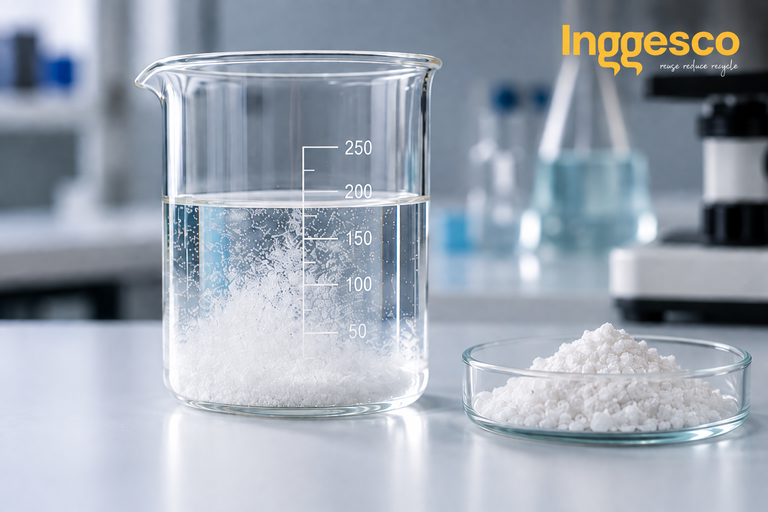
These properties provide an initial description of the product, but they do not in themselves determine its suitability for an industrial application.
Two visually similar raw materials may differ in purity, moisture content or the concentration of certain impurities. A visual inspection should therefore never replace the technical specification.
What Is Potassium Antimony Tartrate Used For?
Over time, the uses of potassium antimony tartrate have evolved and expanded across various technical and industrial fields. Its applications include use in certain processes related to the treatment of textiles and leather.
In a B2B environment, however, it is important to distinguish between a compound having a particular application and a specific grade or specification being suitable for that process.
Before introducing it into production, industrial users should check its compatibility with the established technical requirements.
Main Characteristics of Potassium Antimony Tartrate
From an industrial buyer’s perspective, the most useful characteristics are not limited to the compound’s general properties.
What really matters is understanding the parameters used to evaluate a particular supply.
These may include:
- purity
- pH
- loss on drying
- limits for specific metals
- arsenic content
- appearance
- supply format
Not all these parameters will necessarily have the same importance for every application. For example, a quality department may consider a particular impurity critical, while production may primarily need to check the product’s compatibility with process conditions. The required specification should therefore be defined before comparing quotations.
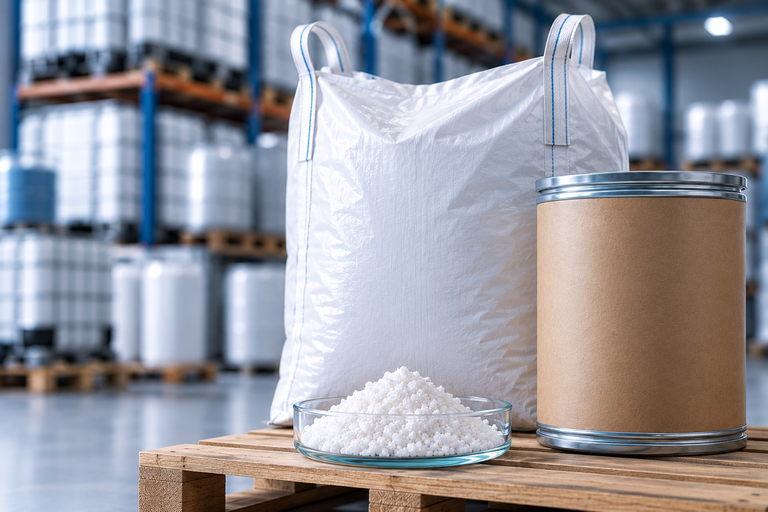
Which Technical Specifications Should Be Considered Before Buying Potassium Antimony Tartrate?
Comparing two quotations solely on price can lead to the wrong conclusion if the products do not have equivalent specifications.
Before requesting or approving a supply of potassium antimony tartrate, at least the parameters relevant to the intended application should be reviewed.
Purity
Purity indicates the proportion of the material corresponding to the specified product according to the established analytical method. However, purity should not be interpreted as the sole indicator of quality.
Two products with the same nominal purity may differ in other relevant parameters.. Comparisons should therefore consider the complete specification.
pH and Loss on Drying
pH provides information about the acid-base behaviour of a solution prepared under the conditions defined in the specification.
Loss on drying, meanwhile, measures the loss in mass experienced by a sample under specified test conditions and may be related, among other factors, to its moisture or volatile component content.
When comparing different products, it is also important to check the conditions and methods used to determine these values, rather than simply comparing individual figures.
Impurity Control
The presence of certain impurities may constitute an acceptance or rejection criterion for a raw material.
- heavy metals expressed as Pb
- arsenic (As)
The relevance of these limits will depend on the buyer’s requirements and the intended application. It is therefore useful for companies to provide their technical specification when requesting a quotation. The supplier can then determine from the outset whether the available product meets those requirements.
What Official Documentation Should Accompany Potassium Antimony Tartrate?
In the industrial distribution of chemical products, having appropriate technical and safety information enables purchasing and quality departments to evaluate a product before introducing it into their processes.
Before placing an order, companies should consider the documents required to approve or use the raw material.. The main documents include:
- Technical Data Sheet (TDS) Provides the product’s characteristics and specifications and enables an initial assessment of its suitability.
- Safety Data Sheet (SDS). Contains information relating to hazards, handling, storage, personal protection and emergency response.
- Certificate of Analysis (CoA) When provided as part of the supply, this document contains the results or parameters corresponding to the analysed batch.
For companies with supplier approval procedures, this documentation may be reviewed even before the first order is placed.
How Should Potassium Antimony Tartrate Be Handled Safely?
Handling this chemical product requires consideration of the classification of substances and mixtures and the corresponding safety measures.. It should not be regarded as a harmless substance.
Specific instructions regarding storage, handling, personal protective equipment and response to exposure should always be checked in the current Safety Data Sheet for the product supplied. We therefore recommend carefully reviewing the guidance on the interpretation and use of chemical safety data sheets.
Before bringing the product onto its premises, a company should check, at a minimum:
- the corresponding SDS
- the specified storage conditions
- the required personal protective equipment
- the stated incompatibilities
- measures for spills or accidental exposure
- internal occupational risk-prevention procedures
Ultimately, safety and purchasing should not be managed as separate processes.. The required documentation should be checked before the substance is introduced into production.
If you need further information about the sale of potassium antimony tartrate or industrial raw materials, please contact our commercial team, who will be happy to answer your questions.
Frequently Asked Questions About Potassium Antimony Tartrate
Which Regulations Apply to the Transport and Logistics of Potassium Antimony Tartrate?
As a compound containing antimony, this product is generally classified as dangerous goods for transport by road (ADR), sea (IMDG) or air (IATA), typically under Class 6.1 (toxic substances).
How Does REACH Affect the Purchase of Potassium Antimony Tartrate?
If the product is purchased within the European Economic Area, the company should verify that the manufacturer or importer has duly registered the substance under the REACH Regulation, where applicable. The relevant Safety Data Sheet should be reviewed to verify the regulatory and registration information applicable to the supplied substance.
What Is the Shelf Life of Potassium Antimony Tartrate?
Although supplied as a crystalline solid or powder, potassium antimony tartrate may deteriorate or become caked if exposed to significant changes in humidity and temperature. Keeping the product in its original, tightly sealed packaging in a dry, well-ventilated area helps preserve its specified characteristics.
Are There Industrial Alternatives to Potassium Antimony Tartrate Depending on the Application?
Depending on the process, such as textile mordanting or leather treatment, alternative compounds or formulations may be available. However, substitution is not necessarily direct or technically viable without affecting process performance. Laboratory testing and technical validation should therefore be carried out before replacing it with another raw material.

 By
By