
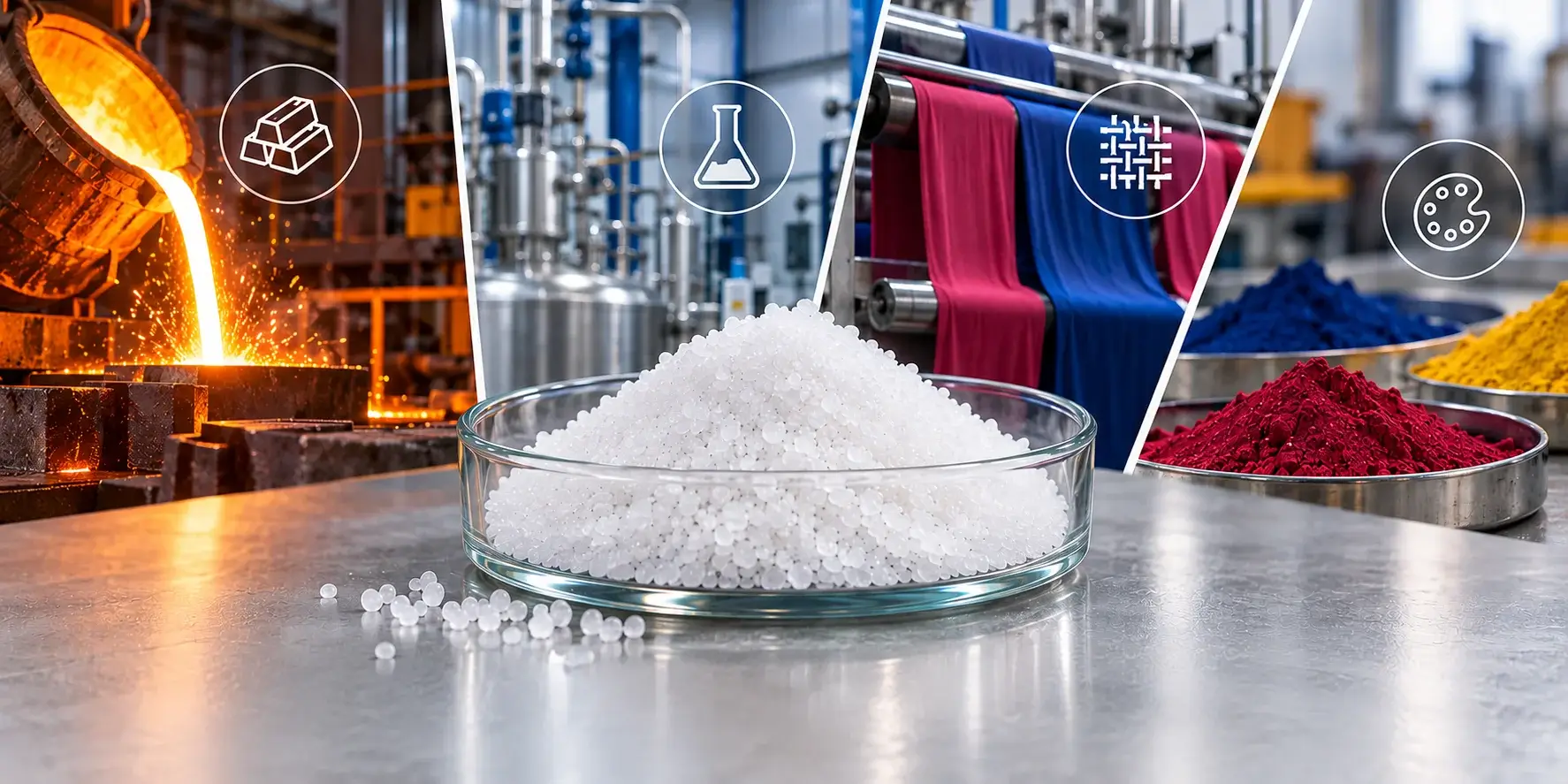
The uses of this type of chemical product span a range of technical and industrial fields. This compound has been used in processes related to metallurgy, the chemical industry and textile treatment, among other applications.
However, understanding its potential uses is only the first step. In a professional environment, a company must determine whether the product’s specific specification is suitable for its process. Factors such as purity, pH, loss on drying and certain impurity limits may be relevant depending on the application.
At INGGESCO, through our experience in the industrial distribution of chemical products, we understand the importance of evaluating each raw material beyond its general applications. In the case of potassium antimony tartrate, understanding its different uses and associated technical characteristics is essential when assessing its potential incorporation into an industrial process.
Main Applications of Potassium Antimony Tartrate
Its applications can be grouped into several areas. For an industrial buyer, this classification is useful for understanding where the product may be used and, above all, what information should be checked before purchasing it.
Applications in the Metallurgical Industry
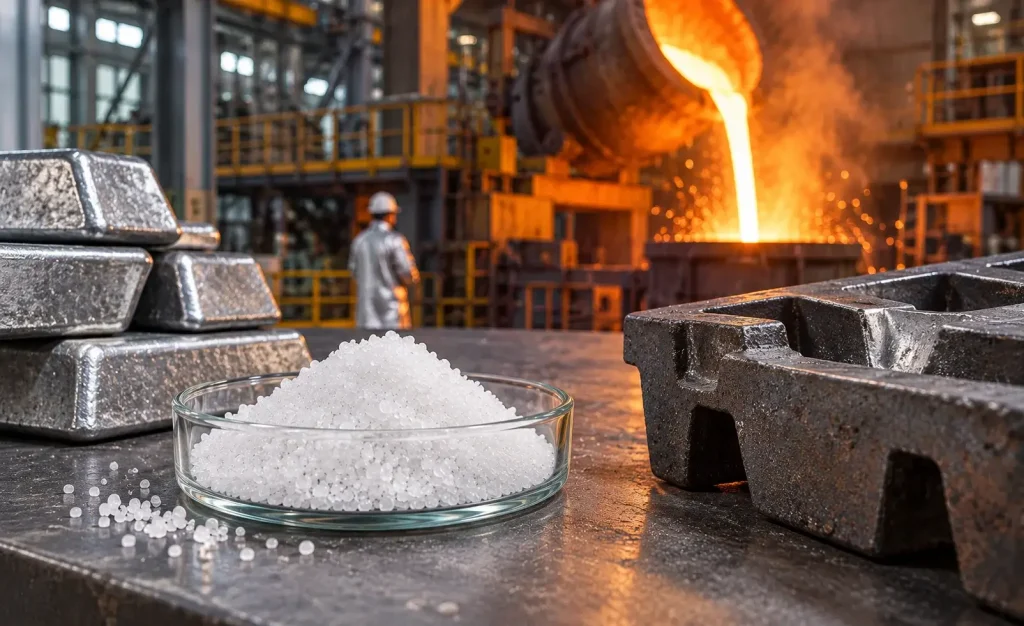
One area in which this chemical product may be used is in certain metallurgical processes, where it can act as an auxiliary agent.
In this sector, the composition of raw materials can influence process performance. Therefore, when a company is considering introducing this compound or replacing an existing product, it should check that the available specification meets its technical requirements.
When assessing a potential supply, it is advisable to provide information such as:
- intended application
- required specification
- required purity
- relevant impurity limits
- approximate quantity
- supply format
- consumption frequency
This ensures that the pre-purchase assessment is not limited to checking the name of the compound alone. For example, if a plant currently uses a particular grade of potassium antimony tartrate, the purchasing department can provide its specification when looking for an alternative. Quality or production teams can then compare the relevant parameters before approving a change.
Use in Industrial Chemical Processes
Potassium antimony tartrate may also be used as a reagent, catalyst or auxiliary agent in certain chemical processes.
In these applications, its specific function depends on the reaction or formulation into which it is incorporated. It is therefore not appropriate to establish a universal dosage or procedure: the conditions must be defined for each individual process.
From a purchasing and laboratory perspective, it is particularly important to understand the product specification before incorporating it into a formulation. A logical procedure would be:
Technical requirement → specification definition → product assessment → validation → purchase → incorporation into the process.
This sequence is particularly useful when qualifying a new supplier or replacing an existing raw material.
Applications in the Textile Industry
Another use traditionally associated with tartar emetic can be found in certain textile industry processes.

Historically, compounds used as mordants or auxiliary agents have played a role in fibre dyeing and treatment processes. Potassium antimony tartrate has been associated with these types of applications.
A mordant is used in certain dyeing processes to promote the interaction between the dye and the material being treated.
For a current industrial application, however, knowing about this historical use is not sufficient to determine whether any particular product is suitable. The formulation, process requirements and applicable regulations for chemical products must also be assessed.
Use in Pigments and Colouring Processes
Potassium antimony tartrate may also be associated with certain processes involving the manufacture or treatment of dyes and pigments, where it can act as an auxiliary chemical agent within a formulation.
Here again, it is important to distinguish between the compound’s general function and the specific requirements of the production process.
When a company works with defined formulations, changing the source of a raw material may require prior validation. Parameters that may appear to have little commercial relevance can be important to quality or laboratory teams.
Before purchasing, it is therefore advisable to compare the specifications of the available product with the company’s internally established acceptance criteria.
Why Is Potassium Antimony Tartrate Used in Different Industrial Processes?
This chemical product can be used in a variety of industrial processes because its chemical properties allow it to act as a reagent, auxiliary agent or component of certain formulations. Its specific function depends not only on the compound itself, but also on the medium in which it is used, its concentration, the other components present and the process conditions.
This versatility explains why it can be found in sectors as diverse as metallurgy, the chemical industry, textile treatment and certain processes involving pigments and colouring. In each case, the product may perform a different function and require specific technical specifications.
For this reason, it is not appropriate to refer to a single universal use. Before introducing this product into an industrial process, factors such as purity, pH, loss on drying, relevant impurities and compatibility with the technical requirements of the application should be assessed.
Ultimately, its presence across different sectors is due to its ability to perform different chemical functions within specific processes, provided that the quality and characteristics of the product are suitable for the intended use.
How to Determine Whether Potassium Antimony Tartrate Is Suitable for a Process
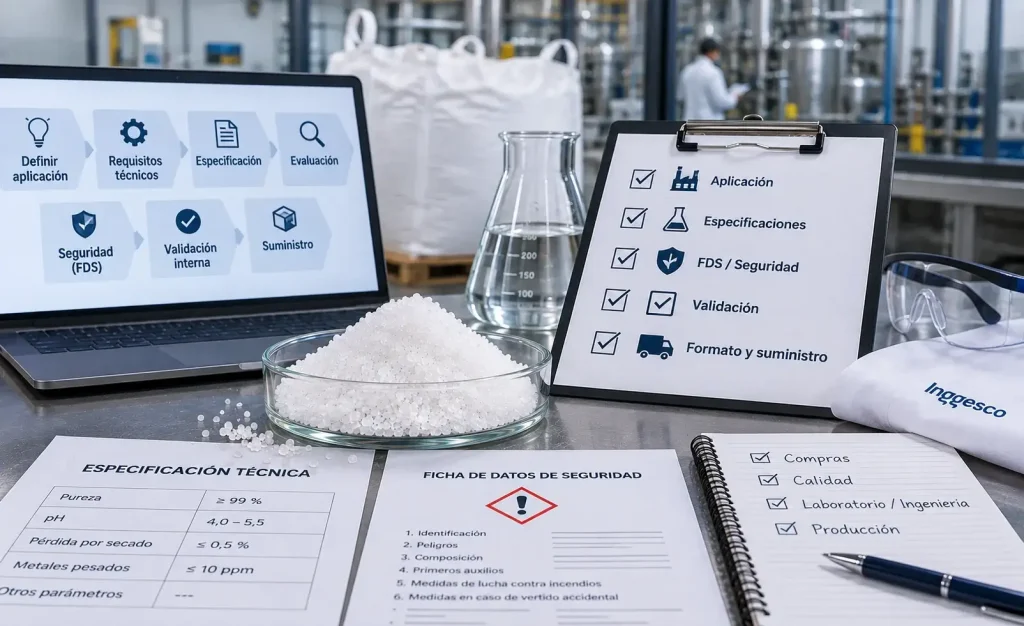
A company considering its use can follow this process:
- Define the application. Determine the function the product is expected to perform.
- Establish the technical requirements Identify the parameters that are critical for production, laboratory or quality control.
- Request the specification Obtain the available technical information before purchasing.
- Compare the requirements. Check whether the specification offered meets the company’s internal criteria.
- Review the safety documentation. Consult the relevant SDS for the product.
- Validate the product internally. Follow the company’s established qualification or testing procedures.
- Define supply requirements. Determine the required format, volume, frequency and destination.
This procedure is particularly useful when several departments are involved.
Purchasing can manage pricing and commercial terms; quality can review specifications; laboratory or engineering teams can assess technical suitability; and production can determine how the product will be integrated into the process. This ensures that the decision is not based solely on the fact that the compound is associated with a particular application.
If you need further information about the supply and distribution of potassium antimony tartrate or any information about raw materials for industrial use, please contact our commercial team, who will be happy to answer your questions.
FAQs About the Industrial Uses of Potassium Antimony Tartrate
Is the Same Potassium Antimony Tartrate Suitable for Every Industrial Application?
This should not be assumed. Although the compound may have the same name, specifications and requirements can vary depending on the process. A company should check that the characteristics of the available product meet its technical criteria before using it.
How Can I Determine Which Parameters Are Important for My Application?
The best approach is to start with the company’s internal specification, formulation or established procedure. Production, quality or laboratory teams can identify which parameters should be considered critical and then compare them with the product documentation.
Can One Grade of Potassium Antimony Tartrate Be Replaced with Another?
A substitution should not be considered automatic simply because both products share the same chemical name. Before making a change, the specifications should be compared and the appropriate internal qualification or validation procedure should be followed.
What Information Should I Provide When Looking for the Product for a Specific Application?
It is useful to provide the intended application, required specification, approximate quantity, supply format, consumption frequency and any technical parameters that must be met.

 By
By