
What Are Magnesium Alloys?
An alloy is a material produced by combining a metal with one or more additional elements to achieve a specific composition and set of properties.
In this type of alloy, Mg forms the base of the material and can be combined with other elements in defined proportions. This makes it possible to obtain different compositions depending on the technical requirements the material must meet.
What Is the Difference Between Pure Magnesium and Magnesium Alloys?
This distinction is particularly important from an industrial perspective. Pure metal consists primarily of Mg, whereas an alloy incorporates other elements to achieve a specific composition and particular characteristics.
Elements that may be included in these alloys include aluminum, zinc and manganese. Their addition can modify properties such as mechanical strength, corrosion resistance and manufacturing characteristics. Therefore, two materials marketed under the general category of magnesium alloys are not necessarily equivalent.
Why Is Magnesium Combined with Other Elements?
The metal in its pure state has certain properties, but these can be modified through the controlled addition of other elements. For example, aluminum, zinc and manganese may be included in alloys designed to modify specific characteristics such as strength, corrosion resistance and weldability.
Composition is therefore essential information when a company needs to purchase this type of material. Providing a generic material name is not enough: it is necessary to determine exactly which alloy and specification the process requires.
Types of Magnesium Alloys
Different families of alloys are used in industry, produced by combining magnesium with other elements such as aluminum, zinc, manganese, silicon, copper, zirconium or rare earth elements in specific proportions.
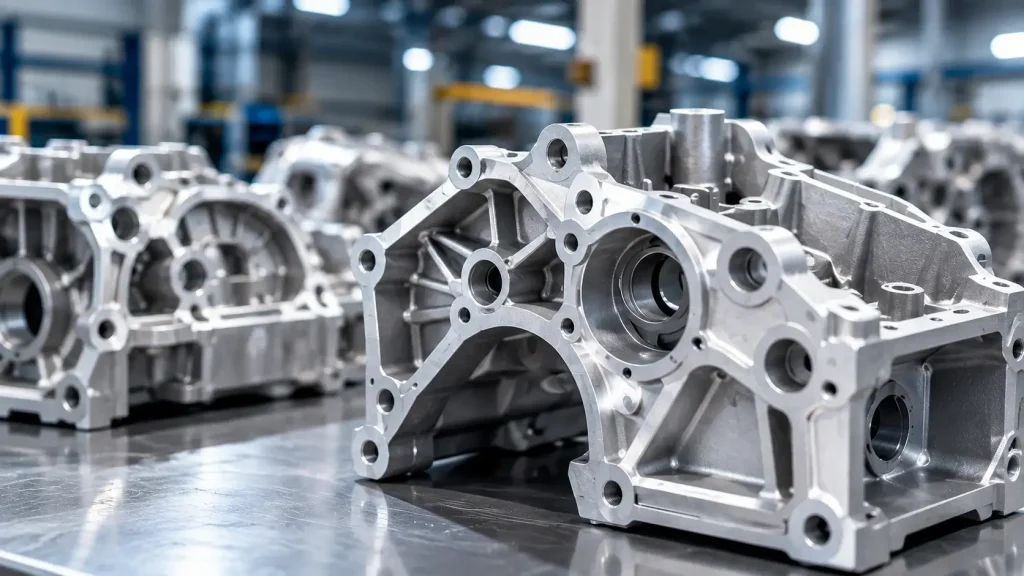
These variations in composition make it possible to obtain materials with different performance characteristics. For example, magnesium-aluminum-zinc alloys are commonly used in casting processes, while other compositions containing zirconium or rare earth elements are used when specific performance characteristics are required at elevated temperatures or under more demanding operating conditions.
Some of the best-known alloy designations include AZ91, AM60, AZ31 and WE43, each with its own composition and characteristics.
This is particularly important for purchasing, quality, production and engineering departments. Before requesting a supply, it is advisable to precisely define the alloy designation, its chemical composition, the applicable standard or specification, and any critical technical requirements for the process.
At INGGESCO, we work with these types of raw materials for industrial use, assisting companies that need to assess composition, technical information, availability and supply conditions. Therefore, if you need more information about industrial magnesium sales or any information about raw material distribution, you can contact our sales team to answer your questions.
FAQs About Magnesium for Industrial Use
Why Is Magnesium Rarely Found Free in Nature?
Magnesium is a chemically reactive element, which means that in nature it is mainly found combined with other elements, forming various compounds and minerals, rather than commonly occurring as a free metal.
Is Magnesium Lighter Than Aluminum?
Yes. In its metallic state, magnesium has an approximate density of 1.74 g/cm³, compared with approximately 2.70 g/cm³ for aluminum. This difference helps explain its importance in applications where material weight is a relevant selection criterion.
Is Magnesium Flammable?
When finely divided, such as in the form of powder, particles or shavings, magnesium can present a significant fire hazard. However, this behavior should not be assumed to apply equally to all its physical forms. For handling, storage and fire prevention measures, the Safety Data Sheet (SDS) and the procedures applicable to the specific product must be followed.
Is Metallic Magnesium the Same as Magnesium Compounds?
No. Metallic magnesium (Mg) is the element in its metallic form, whereas substances such as magnesium oxide, magnesium carbonate and magnesium chloride are different chemical compounds, each with its own composition, properties and applications.

 By